Allan Cowan, 1943-2025

My dad, Allan, died three days before Christmas. He’d lived with prostate cancer for 15 years – almost as long as I have lived in Australia. He chose not to have a funeral service, so in lieu of the public tribute I would have given, I’ve written this.

My dad always had a curious mind. I remember him borrowing a book from Greenock’s magnificent public library on how microwave ovens – in those days still relatively rare in domestic kitchens – worked. He hated when car engines changed from an easily take-apart-able mass of components to sealed black boxes that could only be fixed by a mechanic with a computer and a USB cable.

His love of meddling with machines saw him start his career fixing watches and clocks, then televisions, before joining IBM during the late 60s/early 70s heyday of tech. Never interested in managing people, he focused on his technical skills and worked latterly as a systems analyst, spotting bugs in programs the way I now spot typos in copy. He bought me a Commodore 64 computer the year everyone else got ZX Spectrums for Christmas because he wanted me to learn how to program in Basic, and in his view the Spectrum was more a toy than a PC. I learned a bit, but never could get my head round the binary numbers that he swore were so important in computing.

He took early retirement from IBM, younger than I am now, and dabbled in some freelance work. He was proud of his business name: ACE, for Allan Cowan Enterprises. Later, he’d design programs to remind mum when to take her medication. He once developed a hotel booking system for a non-existent client – just for the fun of it.

He had so many hobbies over the years.  He rode motorbikes (until, I suspect, my mum told him to stop) and pushbikes; he windsurfed; had a dinghy and later a small boat. He took flying lessons and studied Spanish at night classes. He loved messing around with music on the computer, even writing a few of his own tunes that he edited to have applause at the beginning and end, and which miraculously appeared on the car stereo whenever he had a passenger. When I was making podcasts for one of my jobs, I started telling him how I was learning to use a particular piece of audio editing software: of course, he had already mastered it.

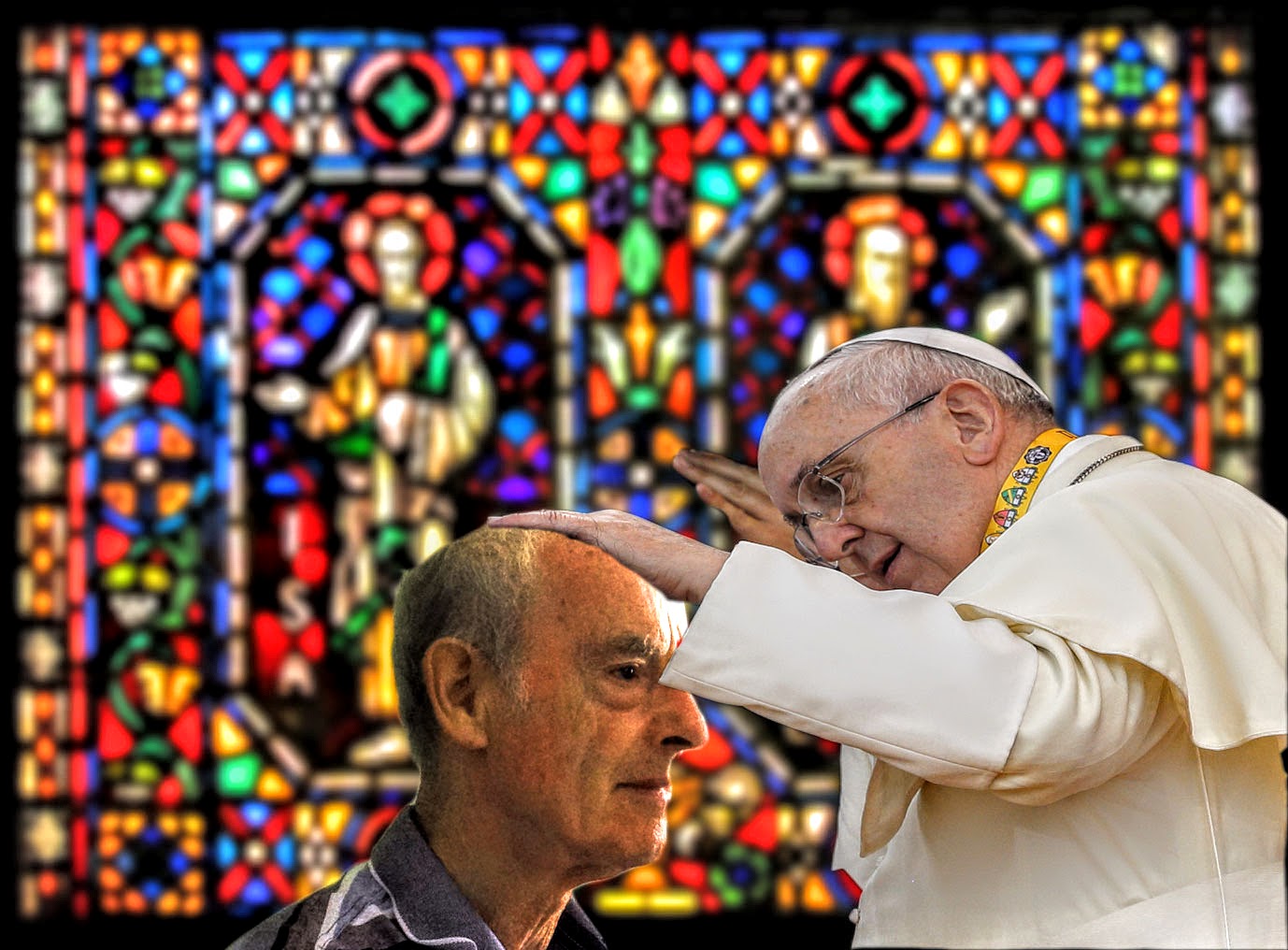
He enjoyed photography and playing with Photoshop, creating psychedelic effects on shots of local landscapes and once creating an image that showed him apparently being blessed by the Pope. He was slightly beyond Richard Dawkins on the atheist scale, but the idea of the photograph tickled him. On my last visit to see him I found a print of the image. I am also an atheist, but it’s going on my wall.
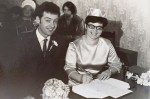
In front of the camera, too, his sense of mischief was always there. He found it almost impossible to pose with a straight face. In his own – and my – wedding photographs, he’s grinning and rarely looking at the lens.

He deliberately mispronounced the name of Scottish town Crianlarich so often that I genuinely thought it had a soft -ch (as in church) at the end, rather than the more likely sound you find at the end of loch. His musical training led him to call his house keys the clefs, an in-joke this budding language scholar and failed pianist thought was so clever.

He never lost the love of the Scottish mountains he’d had since his youth. Glencoe was his spiritual home, in particular the spectacular Buachaille Etive Mòr. For eternal atheist Dad, it was heaven on earth. He climbed alone most of the time, but loved exchanging stories with fellow devotees he met on the route. I never made it higher than the Water Slide – the start of his sacred Curved Ridge – but he taught me to ride a bike in the shadow of the mountain and as a family we spent many summer weekends trying to escape the swarms of midges that filled the air.

Music was another constant. The first record he bought was Diana by Paul Anka; he adored House of the Rising Sun by The Animals, Mike Oldfield’s Tubular Bells and Paul Simon’s Graceland. You Can Call Me Al on the latter particularly resonated, as he’d been called Big Al from Pilton by some colleagues back in the day. But it was the classical genre that he returned to every time: Chopin, Greig and especially Rachmaninoff (Rach 2 being a particular favourite). He played piano better than he would admit to, although preferred not to have an audience in the same room. In July this year I found myself with a spare ticket to see Sparks in Glasgow and insisted he come with me. He tapped along to the Mael brothers, who were almost the same age as him, but later admitted their electronic pop had done nothing for him.

Waiting for the train to Glasgow for the Sparks gig.

After mum died, he struggled with living alone. He was never the best cook, but he kept the house neat and tidy, probably worried that if he didn’t, my mum would have something to say about it – although I wonder where he thought she was watching him from, given his lack of faith. Eventually he found an exercise class for older people (which he called his ‘jigging’ because they moved to music) and went as often as his health would allow. He never understood why his female companions never brought their husbands along – while at the same time (I suspect) relishing his position as the only man in the class.
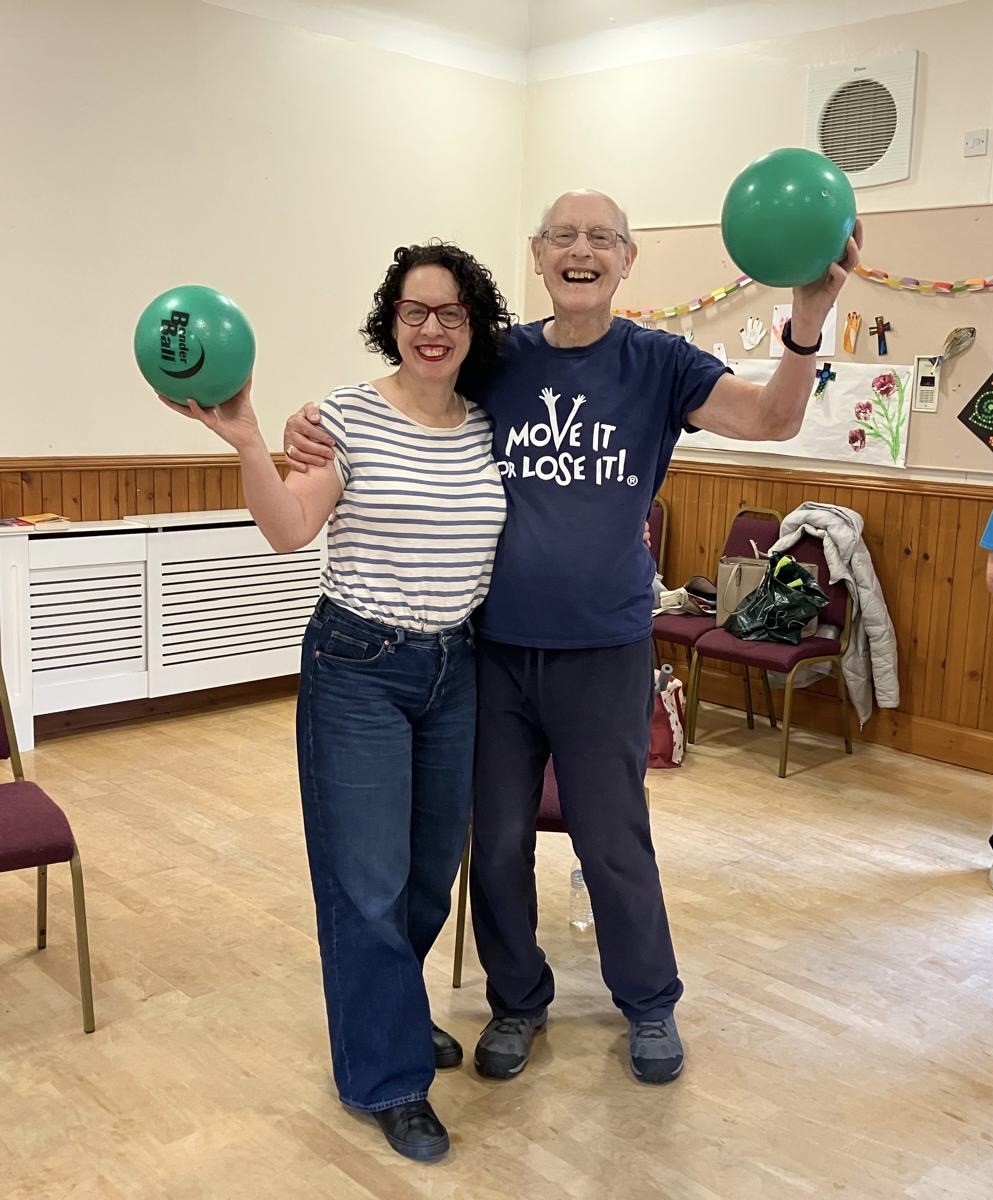
I joined him at his jigging class once. It was surprisingly hard work.

While his progressing cancer miraculously caused very little pain until the end, he was frustrated by the growing weakness in his body and by the mild cognitive impairment he experienced. Just weeks before his death, when he could barely stand, he would say how he needed to get back to jigging, and express genuine surprise that he hadn’t managed a walk outside recently.

Like my mum, he didn’t want a funeral service. I hope it was because as an atheist, he didn’t want a minister of the church presiding over his final journey, and not because he didn’t think anyone would mourn him. Because we do.

The curse of swearing like a foreigner

WARNING: This post contains swearwords. But so did the most popular blog post I’ve ever written, so either deal with it or move on…

My love of appropriate swearing – no, that’s not an oxymoron – has been documented before. I thought I knew the whole lexicon. So you can imagine how excited I was to discover a whole new swearword: shithouse.

At first I wasn’t actually sure whether it meant good or bad. Was it the Aussie’s sense of irony at play? But a quick scan of the Urban Dictionary revealed that it was far more straightforward than that. It definitely means bad.

But much as I love the word, there is a problem with it. I just sound ridiculous saying it.

Maybe it’s because I’m female. It sounds totally natural when spoken by an Aussie man, which of course is where I first heard it. The example of usage given in the Urban Dictionary is perhaps a giveaway: Fuck me, I lost my right testicle! That is shithouse. Frankly, I can’t see when I’d ever use that combination of words, in that order.

Or maybe it’s my Scottish accent. While my accent has definitely got a bit milder in the two decades that I’ve been away from Scotland, the only people who can’t tell that I’m Scottish are those who assume I’m Irish (‘What part of Ireland are you from?’ ‘Er, the part that’s in Scotland…’). Indeed, there are some who still think I sound like Billy Connolly. An Australian colleague’s wife commented on how broad I sounded when she first met me; I felt like turning into the Scottish linguistic equivalent of Crocodile Dundee and introducing her to my relatives and schoolfriends: ‘That’s not an accent. That’s an accent!’

And as anyone who has ever watched anyone from Scotland depicted in a TV drama, swearing is (apparently) what our accents were designed for…although I fear it only extends to our native words.

I’d never want to change the way I speak permanently. Not only would it mean losing my identity, but it would also not go down well with my Scottish compatriots. Just ask Sheena Easton. But it would be nice to sound a bit less Scottish when it mattered – like in my Spanish oral exam at university, or when I need to use the dialect of where I live, rather than where I’m from. In Bristol, I always sounded like I was taking the mickey when I hopped off a bus with a friendly ‘Cheers Drive!’ in my approximation of a West Country accent and in Australia, I can’t say ‘shithouse’ without sounding like it’s a word I’ve never, ever said before.

And that really is shithouse.


Riding for Albi, and ourselves

There are so many reasons why I ride a bike: fitness; the speed compared to other forms of transport; the sheer joy of feeling the wind on my face and the energy in my legs.

But yesterday I rode for Alberto ‘Albi’ Paulon. Albi, a 25-year-old chef, was killed last week as he rode down Sydney Road in Brunswick with his fiancee. A driver opened her car door onto Albi, propelling him into the path of a passing truck. He didn’t stand a chance.

Every urban cyclist has a story to tell about doorings. If they haven’t been a victim themselves, they know someone who has. Near-misses are alarmingly frequent. Drivers presumably don’t mean to put cyclists at risk, but they do, every day.

Thousands of cyclists turned up to a memorial ride for Albi along Sydney Road last night. We gathered at the top of Royal Parade, a sea of green – Albi’s favourite colour – and headed north. As we passed the spot where Albi died, we rang our bells. It was a beautiful sound.

Albi's Ride

Picture: Moreland Leader

At that time of day, Sydney Road is a clearway, so we filled the two northbound lanes. From the middle of the group, all I could see were bikes. Cars trying to enter Sydney Road from side streets had to wait; any driver caught trying to push in was warned by our police escorts. Traders and local residents lined the road – in support, I hope.

After the ride bikes were locked to anything that looked remotely secure. They formed a mural on the fence by the railway line that runs parallel to Sydney Road. The cyclists headed into Brunswick’s many bars, to raise a glass in memory of the friend most of us never met, but who was one of us.

This tragedy has once again highlighted the need for everyone to share the road safely. And change will come, hopefully in the law as well as behaviour.

Albi, your death will not be in vain. Rest in peace.

Happy new year!

What to wear on Australia Day

What to wear on Australia Day

It’s been a while since I’ve been down this way. Is there anybody there? Or have you all wandered off while I’ve been away? I wouldn’t blame you if you did. In fact, if you’re in Australia, you probably have been away.

For in Australia, not a lot happens between December and February. The country takes a siesta, a snooze, a sojourn. Sure, some people return to work immediately after new year, but they don’t really do very much those first few weeks. At least not anything that involves other people, because most of them are on holiday.

No, the Australian start to the new year actually comes on January 27 – the day after Australia Day. On the 26th, the nation rouses itself from whatever it’s been doing for the previous month and prepares for the start of the new year proper by wrapping itself in the Australian flag, drinking VB and listening to Daryl Braithwaite. Every year there are (in my view, very valid) calls for Australia Day to be moved to another date to avoid the annual tradition of rubbing the Aboriginals’ noses in the fact the Europeans invaded, but somehow the sentiment is lost amid boozed-up beachside barbecues and firework displays strangely reminiscent of the ones staged just three weeks before for New Year.

And then on the 27th, everyone returns to the office and the real work starts.

This month-long hiatus in normal activity is a challenge for the incomer who’s not completely adapted to Australian living. For most Aussies, the combination of summer weather and enforced holidays for Christmas is the perfect excuse to head to the coast or to the country. Camp sites are packed and holiday homes booked out at premium rates.

But for this new Australian, it’s just a bit too much excitement in one go. Used to splitting my leisure time between what what passes for summer in the UK and the cold, dark, Christmassy Christmas break, I can’t seem to get my head round blending the two. I like to separate my summer holiday from my Christmas one by around six months, give or take a week. The upshot is that here, I end up neither fully enjoying Christmas nor a mid-year holiday. Despite trying to maintain some of my northern hemisphere Christmas traditions – gorging on DVD box sets and chocolate – I still struggle to feel festive in Oz. It’s too sunny to see the lights on the tree, goddammit. And taking a holiday in June or July is less fun when you’re faced with the worst weather of the year and you can’t just book a £25 Easyjet flight to Spain to escape.

So I take my allotted 10 days off work, potter about, then go back to work as soon as they’ll let me. Got to earn the cash to get me to the European summer somehow.


The girl in the picture

During October, I had my photograph taken every single day. I was raising money for ovarian cancer research by taking part in Frocktober. The challenge was to wear a different frock every day of the month – and there had to be evidence.

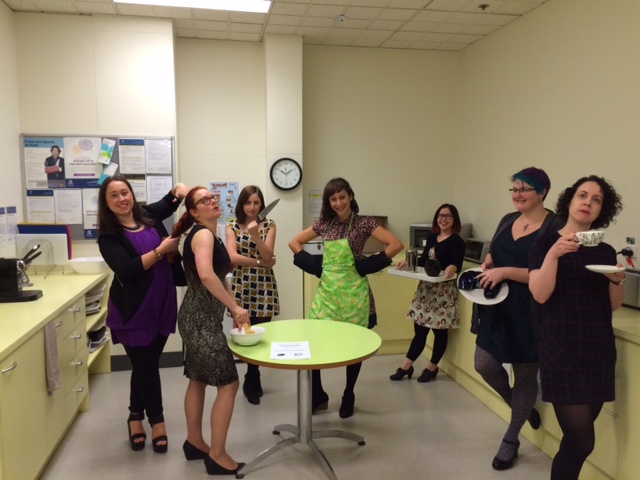
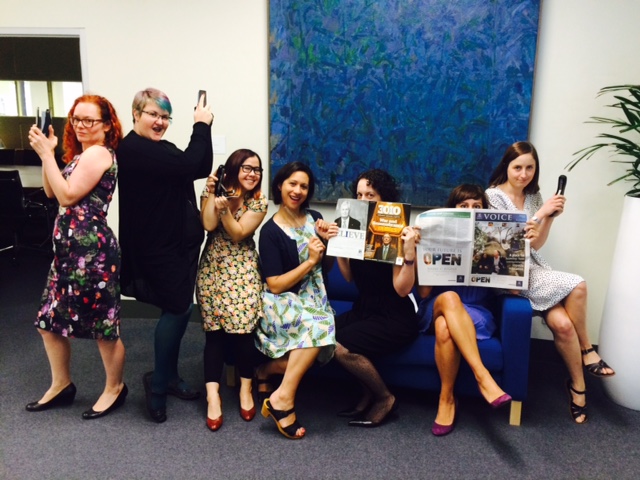
So every weekday morning at 10am I’d gather with my fellow Frockettes in the office for a group shot, and every weekend I’d have a snap taken at home to prove I hadn’t slacked off and slipped into some trousers.

The images taken ranged from the straightforward and classy, like this…

Day 6

or this…

Day 28

to creative tableaux like this…

Day 9

to the downright silly, like this.

Day 23b

Every shot was composed in no more than a few minutes, and snapped on someone’s iPhone, so there wasn’t a lot of time for vanity. I didn’t think that would bother me. I’m not what most people consider high-maintenance. I don’t have a beauty regime beyond regular haircuts and I’ve never had a spray tan or a facial. Beauty salons speak a language I don’t understand and I only ever venture into one once every few years when I have to concede defeat in my own attempts to keep my curly eyebrows under control. I do make an effort to look smart and a little stylish if I can but it’s not the end of the world if I have to leave the house with no make-up on and wearing the clothes I’ve been doing the garden in.

I also don’t have my photo taken that often, and when I do, I am generally on holiday somewhere interesting – so the photograph becomes less about me than the location. I confess to having spent a bit of time thinking about what I would wear before I posed in front of the Taj Mahal (thanks for the pressure, Princess Diana) but generally I slap on a smile and just try not to look too goofy.

But as the month of Frocktober went on I found myself looking more and more critically at each picture. Almost every day, my eye was drawn to some flaw in my appearance: my uneven front teeth, my messy hair with its half-grown-out fringe, my upper arms that have lost a bit of definition since I gave up Pilates. I envied the others’ tanned skin, carefully coiffed hair and ability to smile without showing their gums. I even felt stupid for not being as good at pulling silly faces as some of the others.

My favourite shots of the month became those where I was obscured in some way, by a magazine…

Day 20

or by sunglasses…

Day 30b

I know it’s not just me who thinks like this. A friend once told me she’d been so disappointed when she saw her wedding photographs and realised that despite having spent more time and money on her appearance than any other day of her life, she still didn’t look like a model. Everyone else who saw the photos, of course, saw the reality – a beautiful, happy woman with the glow of someone in love.

Logic tells me that beauty is more than a bone structure, a skin tone, a shapely leg. When I look at photographs of people I love, I just see their brilliant personalities, their kind hearts and loyal friendship. Why can’t we see those things in ourselves?

It’s something I’ll keep working on. And in the meantime, I’ve raised more than $500 towards finding an early detection test for ovarian cancer. Now that is definitely a good look.

Visit the gallery to see all my Frocktober photographs. And it’s not too late to give! Visit my giving site here

Home delivery

Every migrant misses something from their homeland. For Brits, Bisto and Marks and Spencer often top the list.

For me, it’s prawn cocktail crisps – and letterboxes.

Yes, I miss having a slot in my front door through which mail and newspapers can be pushed.

In Australia, if you have a front garden, you don’t have a letterbox in your front door. Instead, like in much of the US, each house has a postbox on the front boundary. It saves the postie a trip up your garden path, a time-saver that was probably quite important when the majority of houses were built on large blocks.

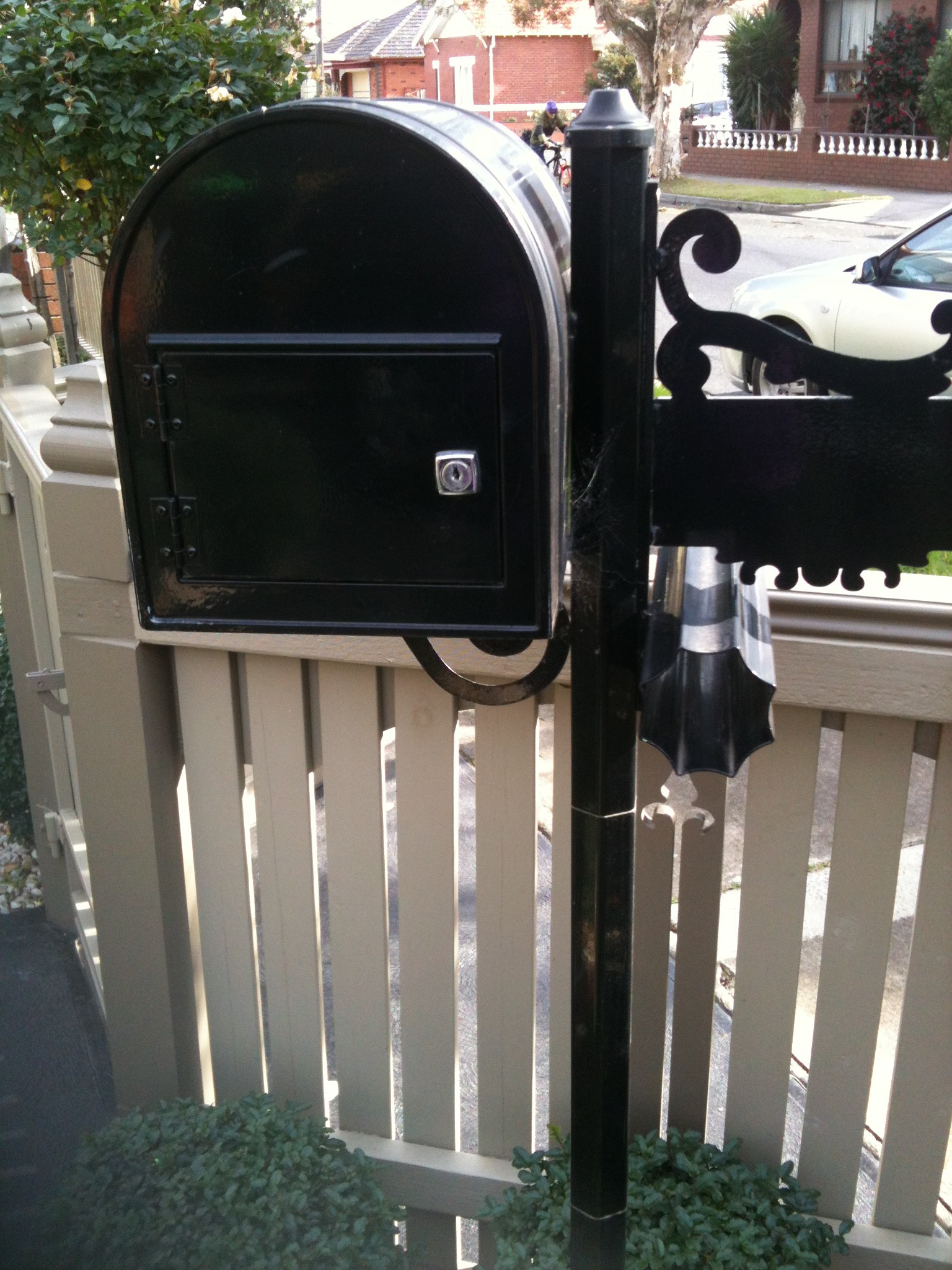
We have a nice black metal mailbox. Like most, it has a handy cylinder attached where large letters and newspapers can be left. Newspapers for delivery come shrink-wrapped in cellophane, a tight tube of newsprint ideally sized for slipping into said cylinder.

Our mailbox

Our mailbox

So why is it that every Saturday and Sunday morning, the newspaper I ordered can never be found in this custom-made receptacle, but instead ends up tucked behind a bush, or rolled under the car? I’ve never actually seen it being delivered but I can only guess it is thrown from a moving vehicle to save time. The missing top of one of my solar garden lights suggests the thrower has the strength, if not the aim, of Mitchell Johnson.

But even if the paper was left in the logical place, the cellophane wrapping causes another problem. The newsprint is so tightly curled that I need to spend 10 minutes trying to flatten it out before I can read it. I’ve mostly given up now, choosing to leave the pages under a heavy book for a few days before catching up on the weekend’s news midweek. I have actually considered cancelling my subscription and walking to the shop to buy a paper when I want one instead, knowing it will be nice and flat.

They say the newspaper industry is dying. Here’s a thought for the executives desperately trying to revive it: maybe it’s not just the fault of the internet…


Reclaiming the night

Last night I joined hundreds of others marching up Sydney Road in Brunswick for Reclaim the Night 2014.

Reclaim the Night is a movement that calls for an end to violence against women, in all its forms.

As I set off to join the crowds at Brunswick Town Hall, I did wonder if I had the right to be there. I’m lucky, I thought. I’ve not had to deal with much in the way of harassment. I don’t know many people that have. I live in an inner north, middle class bubble where everyone votes left, supports asylum seekers and treats each other with respect. Don’t I? A woman at Reclaim the Night actually thanked my husband for turning up (he was one of many men there). The Silver Fox just shrugged his shoulders. Of course he was going to be there. It was the right thing to do.

Sure, when I was at college, there was the student party when, a little worse for wear, I just managed to push a man away as he kissed me, despite my obvious preference – at that precise moment – for going to sleep or throwing up, whichever happened first.

Then there was the time my friend and I were walking home in Perth one evening and a man shouted “Sluts!” at us as he drove past.

And in Melbourne too – Brunswick, in fact – there was the time I was waiting for the Silver Fox to pick me up, after I’d been out with girlfriends, and two men drove past yelling a graphic description of what they would like to do to me out of the window. (Can you imagine how they even planned that little excursion? ‘Hey bro, d’you wanna go out for a beer?’ ‘Nah, mate – let’s just drive round and shout rude stuff at some chicks instead.’)

But I do feel lucky.

I’ve never stayed with a controlling, abusive boyfriend because he convinced me his behaviour was all my fault, like one woman I know.

I’ve never been in the situation of the transgender teacher that my news editor wanted me to write about as if it were a great scandal, rather than a private matter for the woman involved.

And I’ve never told a pal, after going home with a man I met on a night out, that “it wasn’t rape, but…”

And that’s all just within my immediate circle.

Outside of that, the stories are endless, from the “she asked for it” line still so often trotted out about rape victims, to the Courier Mail’s shameful coverage of the murder of Mayang Prasetyo last week, which quite rightly has been slammed by other media. The Everyday Sexism Project website makes for depressing reading.

Something has gone horribly wrong in our society. How did we get to the stage where it is so normal, so acceptable, to disrespect those we share the earth with in such a horrific way? I wasn’t brought up that way, and I would wager that the men driving round Brunswick shouting abuse at middle-aged women waiting on their husbands weren’t either.

I don’t have the answer, but I do know that awareness is the first step in making a change. We all have a responsibility to watch our own behaviour and language, and ask if what we do is in any way contributing to this culture of hate. We all have a responsibility to call out bad behaviour when we see it. And we all have a responsibility to support those affected who, for whatever reason, do not have or cannot find a voice.

That’s why Reclaim the Night matters, and why I was proud to be part of it.

Dressed for success

I won’t be wearing pants for the next month.

But the good/bad news, depending on how you look at it, is that I will be wearing frocks instead. And UK readers, Australia has adopted the annoying Americanism of saying pants to mean trousers, so rest assured, there will be no going commando underneath. Apart from anything else, Melbourne is still bloody freezing.

Anyway, to get back to the real story…I’m taking part in Frocktober, an initiative to raise money for ovarian cancer research. The basic deal is that people sponsor you to wear a dress every day of October. In addition, I have opted to wear a different dress every day. This will a) help me decide once and for all which of my 50+ (yes, you read that right) dresses I actually like and should keep, and b) relieve me of ironing for a whole month, because every one of those frocks is already ironed. What a result.

And of course, most importantly, it will raise much-needed money to increase awareness of ovarian cancer, and develop an early detection test. Ovarian cancer is known as the ‘silent killer’ because symptoms are vague and often strike without warning, and the lack of an early detection test means women are often not diagnosed until it’s too late. Only 20% to 30% of women will survive beyond five years of diagnosis. Pretty scary, huh?

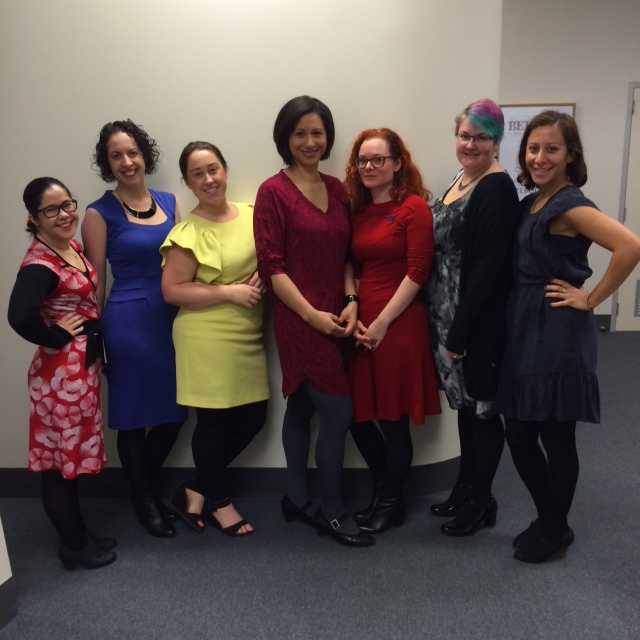
Eight of us from my office have signed up for the challenge (strangely, all women, even although men are more than welcome to participate…). Seven of us were in today for Day One (and I’m sure team member #8 was wearing a frock, wherever she was).

It started out in the classy way one would expect from such a group of articulate, stylish women.

Day 1

A vision of sophistication.

But it wasn’t long before the pressure of the event took its toll.

This is how celebs pose, right?

This is how proper models pose, right?

Despite our limited modelling capabilities, the money has already started coming in. Our team total is sitting at just over $400, which is pretty good for one day’s frock-wearing. The Silver Fox is holding back his cash for now – he has offered to donate varying amounts for each day, depending on how much he likes the dress I am wearing. This approach jars slightly with my feminist principles – I dress for me, not him – but he’s just trying to make it fun, it’s all for a good cause, and in a country where The Bachelor tops the TV ratings, it can feel like feminism never happened.

I’m sure that over the next 30 days I will return to this topic, not least because some of the frocks I don will have a story attached.

In the meantime, if you want to learn more about Frocktober, or even better, make a donation, visit our team site: Advance the Frocks

The only way is up

When I left my old job in Bristol, England, to move to Australia, one colleague was more envious than most. G and her husband J had been toying with the idea of moving to Oz for a while, but kept putting it off for various (eminently sensible) reasons.

Now, they’ve finally made the leap and joined us in Melbourne. They are making good progress in sorting out their new life, which they are reporting on through G’s excellent blog. But today G is having a bad day. The previous tenants of the rental property she and her family have just moved into turned out to be grubby types, and it’s getting tiring sleeping on camping mattresses. First world problems, maybe, but problems most migrants will identify with. I certainly do.

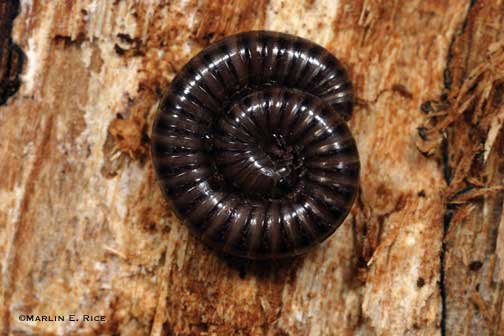
For the first few weeks after the Silver Fox and I landed in Australia, we moved from holiday let to holiday let, unable to find anything longer term that suited. The first was fine, except for the infestation of millipedes that I would find curled up like tiny, crunchy Cumberland sausages everywhere – including, one evening, in our bed. The second had nicer decor (and a washing machine!) but only a bed to sit on – and you couldn’t see the TV from it. By the time we moved to the third, I had a contract at a university and was working from ‘home’, which meant editing on a netbook on a rusting garden table that we’d moved in from the small balcony.

Millipedes: not my ideal housemates

Millipedes: not my ideal housemates

The Silver Fox had a job to go to the Monday after we landed. I got one too, following an interview the day after we arrived, but it didn’t start until a few weeks later. This meant I was left in charge of setting up the things that make life easy: phones, broadband, health insurance, Medicare… I hate dealing with corporations at the best of times, but after a few days of doing little else I was broken. As yet another call centre worker told me I really should pay the highest health insurance premium “because it’s all about peace of mind”, I cracked. I put the phone down, I wept, and when my eyes dried I rang the Silver Fox and told him he would have to do it. I couldn’t take any more.

But once the basics were taken care of, and we had moved into more permanent accommodation, things did get easier. There were still moments of intense frustration with Australia, as I struggled to live by a set of unwritten rules no-one had ever taught me, and got tired of everything just being so hard. The lowest point was an appointment with a GP at the local health centre, when I needed a repeat prescription for something I’d had in the UK. After a wait of two hours (something I had never even experienced on the NHS, and yet I was paying for this!) I finally saw the doctor, who chastised me for not having made an early morning appointment when I just wanted a repeat prescription, and made me feel like a stupid child for not totally understanding what medicines were available in Australia and exactly how Medicare worked.

Packing it all in and going home wasn’t an option for us, so I focussed on the positive. Despite my naturally pessimistic character, there were many things to be positive about. I now had the opportunity to see Paul Kelly play regularly. I found a great dentist who (admittedly for the price of a medium-sized luxury yacht filled with gold bars and steered by a diamond-studded wheel) sorted out my NHS-ravaged teeth. And at my first proper job, I met some great people with whom I am still friends today. (I also met the most rigid bureaucracy I have ever encountered, a fair amount of bullying by senior staff and a dash of good old-fashioned racism, but that’s another story.)

Five years on, and having moved to the city I should have lived in all along, I can’t imagine living anywhere else. I’m still not in a rush to review my health insurance options, but I’ve got an amazing GP and I know where to go for the cheapest prescriptions. I know how to find a Justice of the Peace for those times when a piece of paper just has to be witnessed by someone you’ve never met before for no apparent reason and I understand why you can’t find out how much something costs on certain retail websites without entering your postcode first. And although we’ve now bought our own place, I learned to accept the limitations of our last rental while charming the letting agent into getting the biggest problems fixed.

I feel your pain, G and J, I really do. But you’re going to have to trust me on this one. When you’re at your lowest point, remember there’s only one way you can go.


The Scottish Referendum: a view from an ex-pat

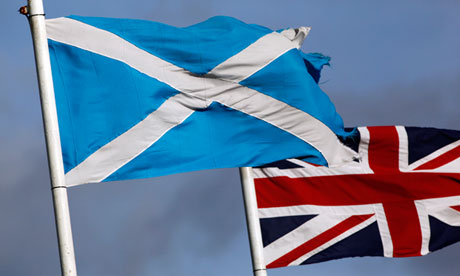
Saltire and union flagI’ve only just become Australian, but in a few days, my ‘other’ nationality will be put to the test when Scotland votes on whether or not to leave the United Kingdom. The idea of Scottish independence has been lurking in the background of Scottish politics for many years, but this is the closest it has ever come to reality.

As a non-resident of Scotland I don’t have a vote, but my accent is enough to prompt discussions about the referendum with almost everyone I meet. Among my friends – Scottish, English and Australian – there are representatives of both sides of the debate. My Facebook feed is filled with photographs of YES posters in suburban windows, balanced by opinions on why Scotland can never be like Norway (and if it was, why Scots would hate having to pay a fortune for beer). It’s clear that while some are making their choice based on the facts as they see them (this is a political campaign, after all, so there has been misinformation and spin on both sides), others are following their hearts.

To vote yes or no to breaking up a union of nations is a huge decision and one that most people outside Scotland, who haven’t been exposed to the growing interest in Scottish nationalism, cannot fathom ever having to make. For Scots, however, the referendum was inevitable and in my view, it represents the greatest opportunity the country has ever had. The fact is that if the Scottish people were truly happy with the status quo, no referendum would have been called. This is a chance to start afresh, to do it our way.

Since the Thatcher years, which saw Scotland’s industries decimated and a series of hugely unpopular policies introduced, the views of the Scottish electorate have diverged sharply from those of their neighbours south of the border. It is easier to spot the Loch Ness Monster than a Scottish Tory. They are so uncommon that when the rare occasions that I meet one, I still find myself doing a double take. In the general election of 1997, not a single Scottish seat was won by the Conservatives. In each of the three elections since then, the Tories have only managed to take one seat. The Conservative share of the vote in the Scottish Parliament – elected by proportional representation – has been dropping steadily for the last few years, and the party currently holds only 15 of 129 seats.

As a result the policies of the Scottish National Party-led Scottish Parliament and its counterpart at Westminster are also wildly different. The powers given to the Scottish Parliament on its formation in 1999 have given the Scots an opportunity to show how they would like things to be, albeit in a limited way. The strong support for the SNP (even prior to the referendum being called) suggests that Scots’ priorities are very different to those of their southern neighbours. University tuition for Scottish students is free; students south of the border pay thousands of pounds for a degree. In Scotland, there is a commitment to free universal healthcare including free prescriptions; in England the National Health Service is being systematically dismantled and a packet of pills will cost you eight pounds. Westminster is happy to have nuclear submarines stationed on the Clyde; the SNP have pledged to remove them. To paraphrase one of the many memes circulating online this week, the yes camp might not be sure of what it’s running towards, but it knows exactly what it’s running away from.

This increasing disparity, combined with a strong sense of patriotism, has undoubtedly added momentum to the yes campaign. There are still many questions about what independence would mean that have not been – and perhaps cannot be – fully answered, but there is undoubtedly a growing sense that Scotland is different, and needs more control over its own destiny. Few in the no camp would be likely to refuse the carrot of additional powers now being dangled by Westminster in the form of ‘devo max’, should independence not be achieved.

And whatever happens, this referendum can only be good for politics. Scotland, a nation which could have been excused for becoming apathetic, having repeatedly voted for one government but received another, thanks to the way British elections are run, has had its interest in politics reignited. Ninety-seven per cent of the adult population have registered to vote in the referendum, some 300,000 more than were registered for the last Westminster election, and turnout is expected to be extremely high. Among the 97 per cent are many 16 and 17-year-olds, given the opportunity to have their say for the first time. The lowering of the voting age was a smart move: it will create a generation of more politically engaged young people, who appreciate the importance of participation in political decisions.

Will Scotland be independent come Friday? Probably not. According to the latest polls, every one of the ‘don’t knows’ need to be converted to yes for that to happen. The natural tendency for many Scots to doubt their own ability may also come into play at the last minute, with some yes voters switching to what they consider the ‘safer’ no. I may not need to replace my UK passport with a Scottish one this year, but a few years from now…who knows. The genie is out of the bottle. It would take a monumental rethink on how the union is governed to lure it back in.